Varen er på fjernlager, leveringstiden er 3-4 hverdage. Mere info
Leveringsmuligheder - Vælges ved checkout
Instabox - Pakkeboks
39,00
GLS - Pakkeshop
39,00
DAO - Hjemmelevering om natten og i de tidlige morgentimer
Perfekt til arbejdsdage - Levering inden kl. 06:00 - Klar når du vågner
45,00
GLS - Levering til hoveddøren
59,00
Afhentning i vores Pick-up point i Ringsted
19,00
Vis alle leveringsmuligheder (5)
DKK
706,00
ex. moms 564,80
Total inkl. fragt
745,00
Funktionen kræver at man er logget ind. Opret en bruger og brug vores smarte liste system til at holde styr på fremtidige indkøb, faste indkøb eller ønskelister. Opret bruger Login
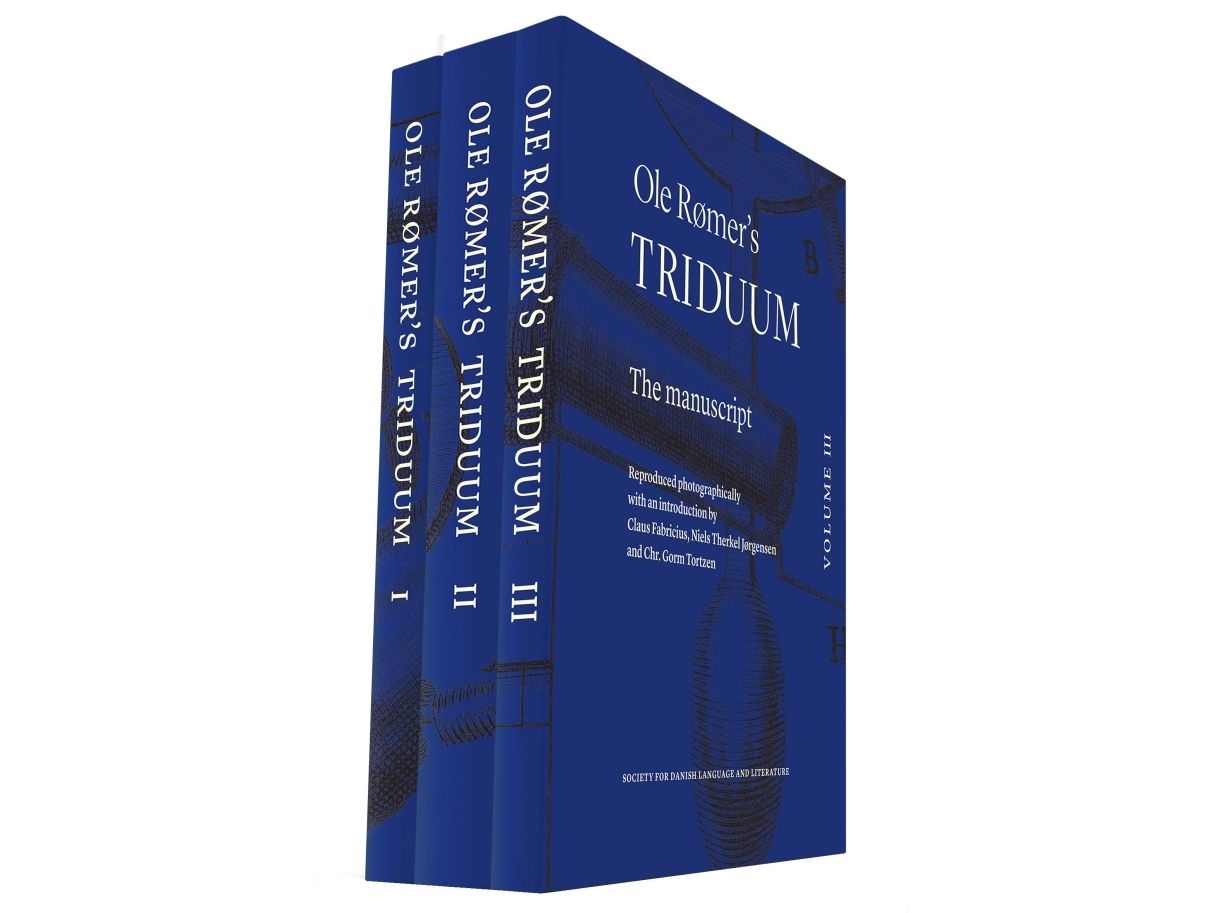
Danish astronomer Ole Rømer (1644-1710) is mainly known for the discovery of the velocity of light, but he was also an important inventor of astronomical instrumentation. He carried out a famous series of astronomical observations during three days and nights in October 1706 from his new observatory west of Copenhagen. They are known as his 'Triduum observations', and because of their high accuracy they came to play a significant role during the 18th century in the first studies of stellar motions. Rømer was well aware of the importance of these observations, and on his deathbed he entrusted his spiritual advisor with a copy of this dataset in order to ensure its publication. Rømer's successor, Peder Horrebow, analysed these observations in great detail and published a book, Basis Astronomiæ, in 1735 with a description of all Rømer's many new astronomical instruments. Nearly all other observations by Rømer were lost in the Fire of Copenhagen in 1728. Ole Rømer’s Triduum Observations is published in three volumes. Volume I describes Rømer's life and work in general and the establishing of the new observatory, and it presents a detailed, modern analysis of the observations. From letters and manuscripts we get a clear impression of Rømer's thoughts, and from the observations themselves we obtain a detailed understanding of his instruments and clocks. Volume II contains a photographic reproduction of Basis Astronomiæ with an English translation of the Latin text (the first ever), while Volume III presents a photographic reproduction of the Triduum manuscript from 1710 wich has never been published in its original form. Claus Fabricius is an astronomer working on the European Space Agency project Gaia at the University of Barcelona, Niels Therkel Jørgensen obtained his PhD at the University of Aarhus on a thesis about Peder Horrebow's unpublished Adytum Astronomiæ, and Chr. Gorm Tortzen is a retired associated professor of classical languages. Ole Rømer’s Triduum vol. I-III is published by the Society for Danish Language and Literature.
Forfatter
Ole Rømer
Sprog
Engelsk
Sideantal
819
Indbinding
Indbundet
Søgeord
Ole Rømer,astronmi,Triduum
Udgave
1
Forlag
Det Danske Sprog- og Litteraturselskab
Tema gruppe(r)
Teoretisk og matematisk astronomi,Astronomiske observationer: observatorier, udstyr og metoder,Naturvidenskabens historie
ISBN10
8775330601
ISBN13
9788775330607
Produktet er kendt under følgende varenumre i vores system
EAN:
9788775330607
SKU:
9788775330607
Hvorfor oplever jeg at den umiddelbart samme vare findes på forskellige varenumre?
Producenterne udgiver ofte den samme vare med forskellige varenumre, typisk handler det udelukkende om forskellige versioner af emballagen. Eksempelvis kan emballagen være målrettet forskellige lande.
Vi forsøger bedst muligt at samle varerne, men det kan opleves at den samme vare figurerer på forskellige varenumre i vores system.