Varen er på fjernlager, leveringstiden er 3-4 hverdage. Mere info
Leveringsmuligheder- Klik på en mulighed for at vælge
Instabox - Pakkeboks
39,00
GLS - Pakkeshop
39,00
DAO - Hjemmelevering om natten og i de tidlige morgentimer
Perfekt til arbejdsdage - Levering inden kl. 06:00 - Klar når du vågner
45,00
GLS - Levering til hoveddøren
59,00
Afhentning i vores Pick-up point i Ringsted
19,00
Vis alle leveringsmuligheder (5)
DKK
691,00
ex. moms 552,80
Total inkl. fragt
730,00
Tilføj til liste
Funktionen kræver at man er logget ind. Opret en bruger og brug vores smarte liste system til at holde styr på fremtidige indkøb, faste indkøb eller ønskelister.
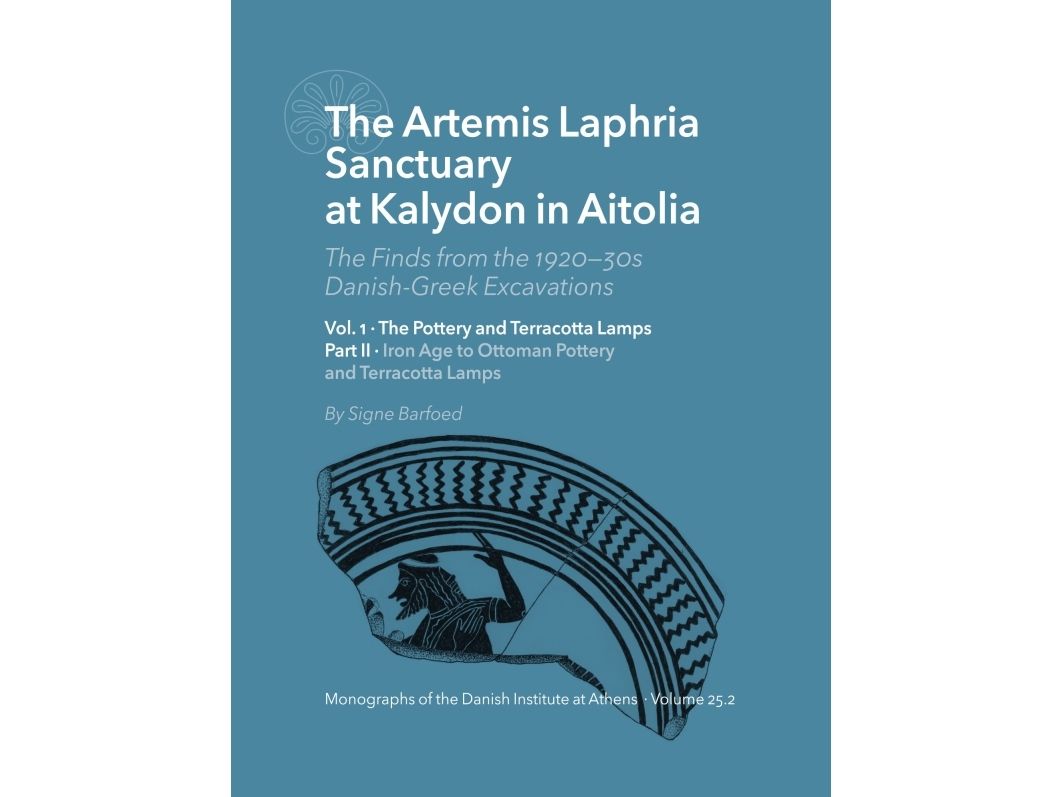
The Artemis Laphria Sanctuary at Kalydon in Aitolia. The Finds from the 1920s—30s DanishGreek Excavations – Vol. 1: The Pottery and Terracotta Lamps offers the first comprehensive analysis of the ceramic material recovered from the sanctuary of Artemis Laphria at Kalydon, Aitolia, excavated in the 1920s and 1930s by Frederik Poulsen, Konstantinos Rhomaios, and Ejnar Dyggve. While the sanctuary’s architecture and topography were published in 1948, the extensive ceramic assemblages, dating from the Prehistoric to Late Antique periods, remain largely unpublished until now. This volume constitutes a significant contribution to the study of archaeology in the region of Aitolia, ancient Greek religion, and ceramic production and consumption. It presents notable Mycenaean material alongside distinctive locally produced wares — including a rhyton with an exceptional figured scene — and imported pottery from Corinth, Attica, and Elis, highlighting Kalydon’s long-standing interregional connectivity. In addition to detailed typological and morphological analyses, the volume offers a critical reassessment of the excavation history as well as a contextualised interpretation of the assemblage in relation to the sanctuary’s overall diachronic development.
Undertitel
Vol. 1: The Pottery and Terracotta Lamps (Part I–II)
Originalsprog
Engelsk
Oplag
1
Udgivelsesdato
2025-11-17
Første udgave
2025
Forfatter
Signe Barfoed
Sprog
Engelsk
Sideantal
827
Indbinding
Indbundet
Udgave
1
Forlag
Aarhus Universitetsforlag
ISBN13
9788775973675
Tema gruppe(r)
Arkæologi
Produktet er kendt under følgende varenumre i vores system
SKU:
9788775973675
EAN:
9788775973675
Hvorfor oplever jeg at den umiddelbart samme vare findes på forskellige varenumre?
Producenterne udgiver ofte den samme vare med forskellige varenumre, typisk handler det udelukkende om forskellige versioner af emballagen. Eksempelvis kan emballagen være målrettet forskellige lande.
Vi forsøger bedst muligt at samle varerne, men det kan opleves at den samme vare figurerer på forskellige varenumre i vores system.