Varen er på fjernlager, leveringstiden er 3-4 hverdage. Mere info
Leveringsmuligheder - Vælges ved checkout
Instabox - Pakkeboks
39,00
GLS - Pakkeshop
39,00
DAO - Hjemmelevering om natten og i de tidlige morgentimer
Perfekt til arbejdsdage - Levering inden kl. 06:00 - Klar når du vågner
45,00
GLS - Levering til hoveddøren
59,00
Afhentning i vores Pick-up point i Ringsted
19,00
Vis alle leveringsmuligheder (5)
DKK
238,00
ex. moms 190,40
Total inkl. fragt
277,00
Funktionen kræver at man er logget ind. Opret en bruger og brug vores smarte liste system til at holde styr på fremtidige indkøb, faste indkøb eller ønskelister. Opret bruger Login
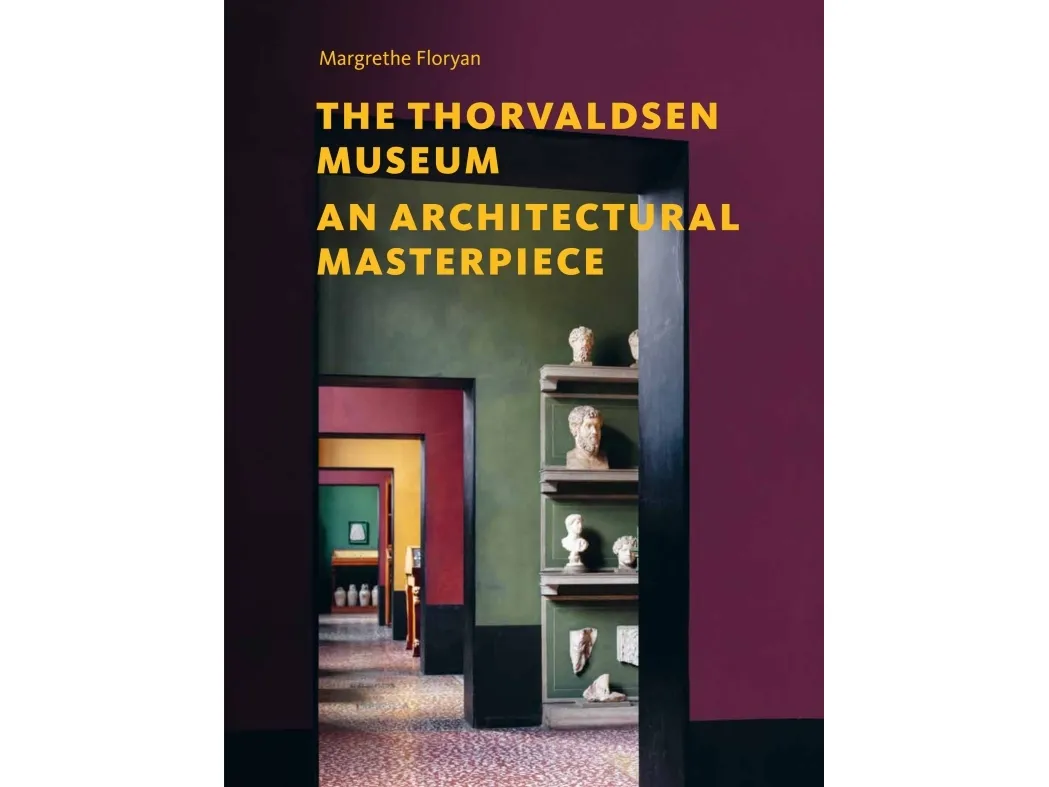
The Thorvaldsen Museum bears the name of one of Europe’s most renowned sculptors, Bertel Thorvaldsen (1770–1844). Having spent more than 40 years working in his studio in Rome, Thorvaldsen bequeathed the contents of his workshop and his extensive art collections to Copenhagen, the city of his birth. The Museum, which opened in 1848, reflects the Enlightenment objective of free public access to art and education, while also respecting Thorvaldsen’s political perspective. The bequest was to the people of Denmark, rather than to the Crown. The 1840s was a period of political transition throughout Europe; in 1849, absolute monarchy was abolished in Denmark. The large yellow ochre building in the centre of Copenhagen is one of the most striking sights in the city. A sense of wonderment grows when the visitor steps inside. The floors are covered with geometrical patterns, the walls painted in colours from a palette of earth tones, and the 4,000 m2 of decorated ceilings could have been borrowed from architectural features of Antiquity and the Renaissance. The iconic portal motif on the outer and inner walls dates back to Egyptian, Etruscan and Roman architecture. Thorvaldsen is buried in the open courtyard at the heart of the building, a haven of peace and beauty that transports us to the greatest archaeological sites of the Roman-Pompeian era. The Thorvaldsen Museum was the first building design undertaken by the architect M.G. Bindesbøll (1800–1856), and it was his greatest achievement. After four intense years studying the architecture of Rome, Naples, Athens, and several other locations in southern Europe, he was well acquainted with the world in which Thorvaldsen’s sculptures were also created. Discussions between the two artists, and Bindesbøll’s ever growing courage to experiment with forms and colours, space and rhythm, resulted in a true Gesamtkunstwerk. The Thorvaldsen Museum. An Architectural Masterpiece tells the story of this ambitious building project and provides a richly illustrated introduction to the remarkable design, the colours and motifs that decorate the Museum. Margrethe Floryan PhD is Senior Curator at the Thorvaldsen Museum. Her publications include books, exhibition catalogues and articles about sculpture, architecture and garden aesthetics of the 18th to 20th centuries.
Undertitel
An Architectural Masterpiece
Forfatter
Margrethe Floryan
Sprog
Engelsk
Sideantal
232
Indbinding
Paperback
Udgave
1
Forlag
Aarhus Universitetsforlag
Tema gruppe(r)
Kunst og kultur: generelle emner
ISBN10
8775976287
ISBN13
9788775976287
Produktet er kendt under følgende varenumre i vores system
EAN:
9788775976287
SKU:
9788775976287
Hvorfor oplever jeg at den umiddelbart samme vare findes på forskellige varenumre?
Producenterne udgiver ofte den samme vare med forskellige varenumre, typisk handler det udelukkende om forskellige versioner af emballagen. Eksempelvis kan emballagen være målrettet forskellige lande.
Vi forsøger bedst muligt at samle varerne, men det kan opleves at den samme vare figurerer på forskellige varenumre i vores system.