Varen er på fjernlager, leveringstiden er 3-4 hverdage. Mere info
Leveringsmuligheder - Vælges ved checkout
Instabox - Pakkeboks
39,00
GLS - Pakkeshop
39,00
DAO - Hjemmelevering om natten og i de tidlige morgentimer
Perfekt til arbejdsdage - Levering inden kl. 06:00 - Klar når du vågner
45,00
GLS - Levering til hoveddøren
59,00
Afhentning i vores Pick-up point i Ringsted
19,00
Vis alle leveringsmuligheder (5)
DKK
281,00
ex. moms 224,80
Total inkl. fragt
320,00
Tilføj til liste
Funktionen kræver at man er logget ind. Opret en bruger og brug vores smarte liste system til at holde styr på fremtidige indkøb, faste indkøb eller ønskelister.
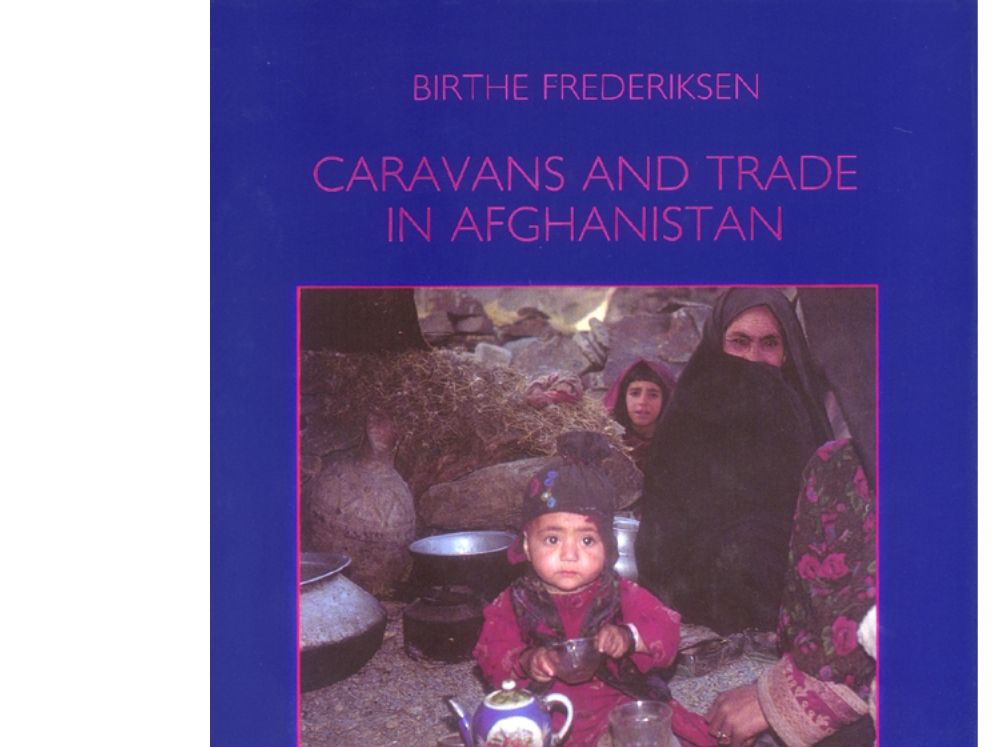
The Hazarbuz is a sub-group of the Pashtun Mohmand engaged in caravan trading in East Afghanistan along the route to Turkestan which for centuries has been linked to the Silk Road, the age-old connection between the Orient and the Occident. The book traces the socio-economic and political transformation of Hazarbuz community over the past century. It describes the successive changes from a pastoral way of life to a settled existence in bazaars in Afghanistan and lately in crowded refugee camps in Pakistan, where many Hazarbuz went in exile after 1979. The analysis is based on the author’s field data and the scanty literary sources. The work discusses the historical factors which partly encouraged and partly forced the nomads to engage in transport activities with their camels and, from the 1920s, to turn to trade. While the Hazarbuz exported a variety of products from Afghanistan to the Indus lowland, their main source of income has come from the import and sale of tea in the northern regions of Afghanistan. The transformation of Hazarbuz pastoral economy is analyzed within the wider context of cultural and political change and with particular attention to kinship ideologies, social organization, and notions of solidarity. The book also contains: Appendix: Fieldwork among the Hazarbuz, Bibliography, Glossary and Index. Published in 1995 in the series The Carlsberg Foundation's Nomad Research Project. Hardcover with dust jacket. 294 pages. 184 illustrations – 86 in colour - and 9 maps (e.g.: distribution of ethnic groups, Hazarbuz migration routes between winter and summer areas, Hazarbuz caravan routes). This book is tightly connected with the works of Gorm Pedersen (Afghan Nomads in Transition: A Century of Change Among the Zala Khân Khêl, 1994) and Klaus Ferdinand (Afghan Nomads. Caravans, conflicts and trade in Afghanistan and British India, 2006). See also: Asta Olesen: Afghan Craftsmen. The Cultures of Three Itinerant Communities, 1994. All published in the series The Carlsberg Foundation’s Nomad Research Project. Birthe Frederiksen is a social anthropologist. She did fieldwork among pastoral nomads and bazaar merchants in Afghanistan in 1975 and resumed her work among the very same people in the refugee camps in Pakistan in 1988.
Undertitel
The changing life of the nomadic Hazarbuz
Forfatter
Birthe Frederiksen
Sprog
Engelsk
Sideantal
292
Indbinding
Indbundet
Udgave
1
Serie
The Carlsberg Foundation's Nomad Research Project
Forlag
Forlaget Rhodos, Thames & Hudson
Tema gruppe(r)
Sociologi og antropologi
ISBN10
8772455667
ISBN13
9788772455662
Produktet er kendt under følgende varenumre i vores system
SKU:
9788772455662
EAN:
9788772455662
Hvorfor oplever jeg at den umiddelbart samme vare findes på forskellige varenumre?
Producenterne udgiver ofte den samme vare med forskellige varenumre, typisk handler det udelukkende om forskellige versioner af emballagen. Eksempelvis kan emballagen være målrettet forskellige lande.
Vi forsøger bedst muligt at samle varerne, men det kan opleves at den samme vare figurerer på forskellige varenumre i vores system.