Varen er på fjernlager, leveringstiden er 3-4 hverdage. Mere info
Leveringsmuligheder - Vælges ved checkout
Instabox - Pakkeboks
39,00
GLS - Pakkeshop
39,00
DAO - Hjemmelevering om natten og i de tidlige morgentimer
Perfekt til arbejdsdage - Levering inden kl. 06:00 - Klar når du vågner
45,00
GLS - Levering til hoveddøren
59,00
Afhentning i vores Pick-up point i Ringsted
19,00
Vis alle leveringsmuligheder (5)
DKK
496,00
ex. moms 396,80
Total inkl. fragt
535,00
Tilføj til liste
Funktionen kræver at man er logget ind. Opret en bruger og brug vores smarte liste system til at holde styr på fremtidige indkøb, faste indkøb eller ønskelister.
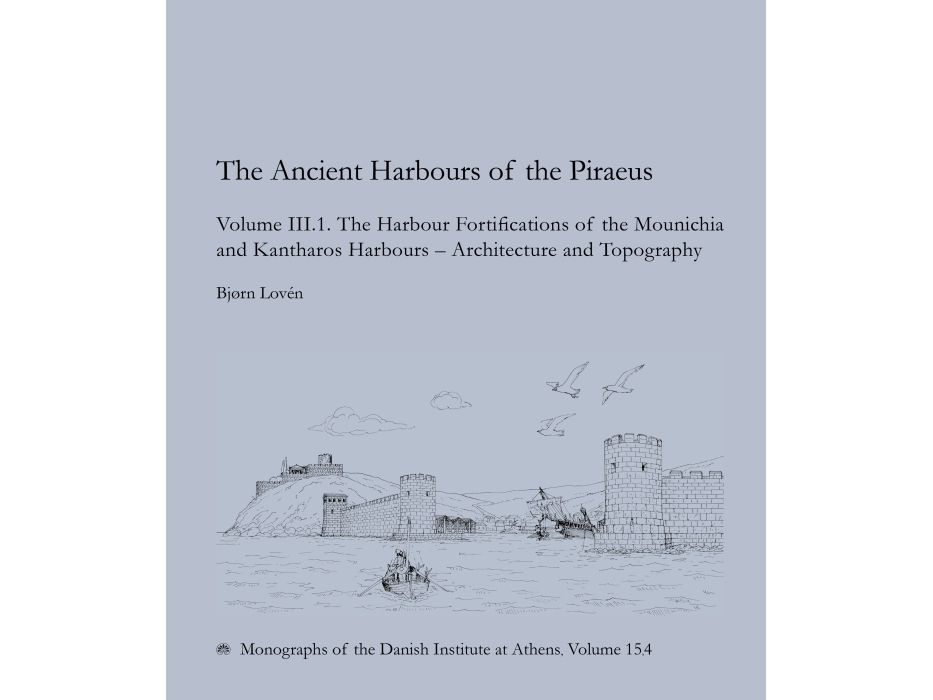
Volumes 15,4 (134 pages) and 15,5 (247 pages, 259 ill., 45 A3 plates) are conceived as a single volume (III.1–2) comprised of two fascicules. III.1: The Harbour Fortifications of the Mounichia and Kantharos Harbours – Architecture and Topography. The primary objective of this fascicule is to present the results of the Zea Harbour Project’s investigations of the harbour fortifications at Mounichia in 2005 and the period 2007 to 2012 and to re-examine what can be known about the fortifications of Kantharos, which continues to serve as the Piraeus’ principal harbour to the present day. Chapter 1 (Introduction) considers the objectives, textual sources, archaeological evidence, terminology, and methodology involved, introducing two new terms: “fortified mole” and “fortified breakwater.” Chapter 2 presents the textual evidence relating to the fortifications of the Piraeus, contextualising these structures within the history of the Piraeus from the late 6th century BC until their destruction by Sulla’s forces in 86 BC. Chapter 3 offers an overview of the documentation created by travellers since 1589, topographers since 1686, and scholars since 1881, focusing on their descriptions of the structural remains of the harbours in the Piraeus, but also bringing relevant cartographic, photographic, and artistic documents into consideration. Chapter 4 explores the topography of the fortifications at Kantharos Harbour based on published data. Chapter 5 does likewise for Mounichia, drawing on the findings of the Project’s fieldwork there to provide a detailed analysis of the harbour fortifications’ architecture, supported by feature catalogues of the northern and southern fortified moles. These monumental structures were probably initially constructed in the early 5th century BC. Two later building phases belonging to the 5th century BC (in all probability 429/28 BC or shortly thereafter) and the 4th to 3rd centuries BC have been identified. III.2: The Themistoclean Shipsheds in Group 1 at Mounichia Harbour – Architecture, Topography and Finds. This fascicule presents the findings of the Project’s 2010–2012 investigations on the northern side of Mounichia Harbour to discuss the architecture and topography of Shipsheds 1–7 in Group 1. Chapter 1 is devoted to the survey and excavation of this set of shipsheds. Shipshed 1(α), dated to terminus post quem 500–480 BC, represents the Zea Harbour Project’s most important discovery: of all the Classical-period structures in the Piraeus, only Shipshed 1(α) has a compelling claim to be linked to Themistocles’ building programme. Chapter 2 offers a survey and catalogue of the ceramics and other small finds discovered during the excavation of Shipshed 1(α) and of the northern fortified mole at Mounichia. Appendices, Figures, and Plates complete the volume.
Undertitel
Vol III.1+2.
Originalsprog
Dansk
Oplag
1
Udgivelsesdato
2021-09-28
Første udgave
2021
Forfatter
Bjørn Lovén og Ioannis Sapountzis
Sprog
Dansk
Indbinding
Indbundet
Udgave
1
Serie
Monographs of the Danish Institut at Athens (15,4 and 15,5)
Forlag
Aarhus Universitetsforlag
ISBN13
9788772193410
Tema gruppe(r)
Arkæologi
Produktet er kendt under følgende varenumre i vores system
SKU:
9788772193410
EAN:
9788772193410
Hvorfor oplever jeg at den umiddelbart samme vare findes på forskellige varenumre?
Producenterne udgiver ofte den samme vare med forskellige varenumre, typisk handler det udelukkende om forskellige versioner af emballagen. Eksempelvis kan emballagen være målrettet forskellige lande.
Vi forsøger bedst muligt at samle varerne, men det kan opleves at den samme vare figurerer på forskellige varenumre i vores system.